Pune industrial AI startup Haber crossed Rs 200 crore in operating revenue in FY26. Revenue from operations rose 38.7 percent to Rs 215 crore from Rs 155 crore a year earlier, according to the company’s consolidated financial statements filed with the Registrar of Companies.
The growth came with tighter economics. Total expenses rose 28.3 percent to Rs 245 crore, slower than revenue growth, and the net loss narrowed 53 percent to Rs 11.24 crore. Total revenue including other income reached Rs 233 crore against Rs 167 crore in FY25.
Profitability is moving in the right direction
Haber still loses money, but the gap is closing fast. Its EBITDA margin improved to minus 4.48 percent in FY26 from minus 10.53 percent a year earlier. Current assets stood at Rs 398 crore at the end of March 2026, down from Rs 429 crore a year earlier.
What Haber actually does
Founded in 2017 by Vipin Raghavan, Priya Venkat and Arjunan PN, Haber builds AI driven robots and software that automate sampling, measurement and chemical dosing inside factories. Its flagship platform eLIXA launched the same year and now serves pulp, paper, packaging, tissue and water treatment plants.
The pitch to manufacturers is straightforward. Real time data lets plants hold product quality steady while using less water, energy and chemicals. Haber says most clients see a return on investment within six to nine months of adopting its systems.
The money behind the machines
Haber has raised more than 65 million dollars across its rounds. That includes a 38 million dollar Series C in October 2024 led by Creaegis with Accel and BEENEXT, and a 20 million dollar Series B in 2021 led by Ascent Capital.
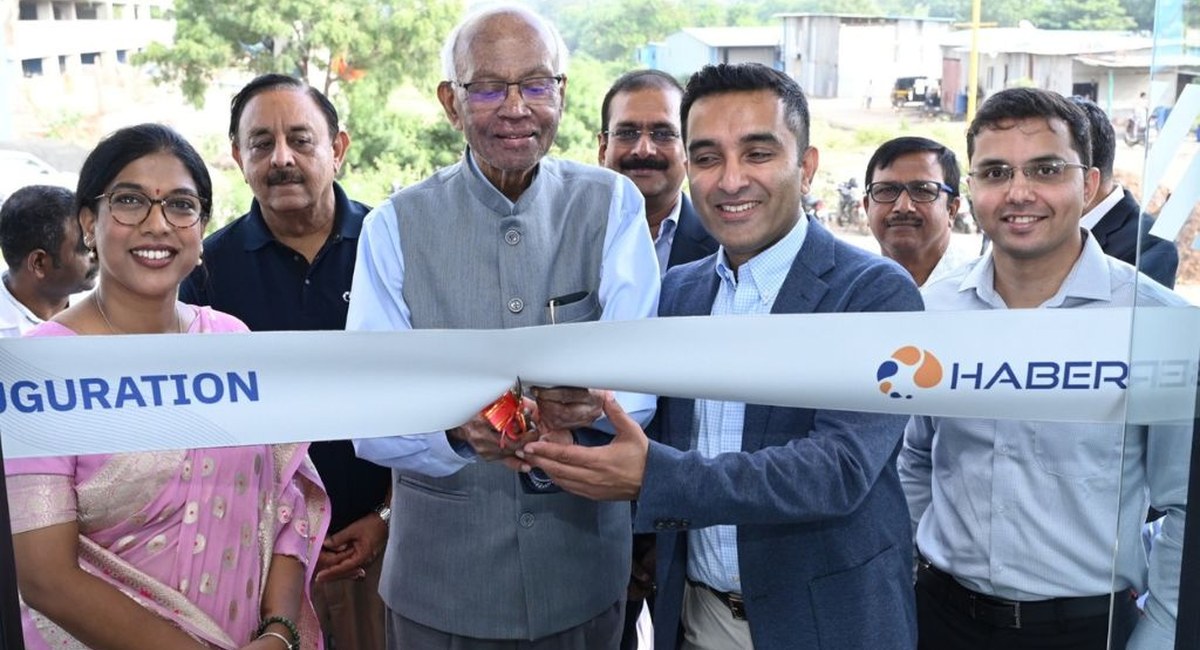
In October 2025 the company opened an AI Green Chemistry Lab at its Pune campus, backed by a research commitment of more than 10 million dollars. The lab lets Haber test new formulations in a pilot plant before they reach factory floors, shortening the path from idea to deployment.
“Innovation has always been at the core of Haber. With this new AI-driven lab and pilot plant, we are shortening the journey from concept to commercial deployment. This facility empowers our team to rapidly prototype smarter chemistries, minimize risk, and deliver solutions that help industries improve efficiency, reduce waste, and scale up sustainable practices faster than ever.”
Vipin Raghavan, CEO and co-founder of Haber
Haber says its technology has helped clients save about 30 million cubic metres of water, 97,000 MWh of energy and more than 92,000 tonnes of emissions. The FY26 numbers suggest that industrial demand is now turning into scale, with revenue growing faster than costs for the year.
The company is still loss making, so the next test is turning scale into profit. The FY26 accounts show the gap closing, and if Haber can hold revenue growth ahead of costs for another year, breakeven comes into view.