Preventive health startup Cent has raised $15 million in a Series A round co-led by Blume Ventures and existing investor South Park Commons. The round combines equity and debt, and the company has not disclosed its valuation or the split between the two parts.
The Bengaluru startup will use the money for research and development and to expand its artificial intelligence, engineering and clinical teams. It has also acquired Medsee, an AI-powered radiology reporting platform founded by Chitra Singh.
What Cent does
Cent runs its own preventive health centres in Bengaluru, Mumbai and Delhi-NCR. Its flagship offering, Cent Check, packs a full-body MRI, low-dose CT, DEXA scan, ECG and echocardiography plus more than 100 biomarkers into a visit of about two hours.
Specialist doctors review the results and members leave with a health plan and follow-up support through the year. Cent says it has completed 10,000 whole-body scans since it started, and it is targeting 10 million scans by 2035.
The acquisition matters because reporting is the bottleneck as scan volumes grow. Medsee drafts structured radiology reports and highlights findings for qualified radiologists to review, which Cent says will keep reporting faster and more consistent.
A founder team built for this problem
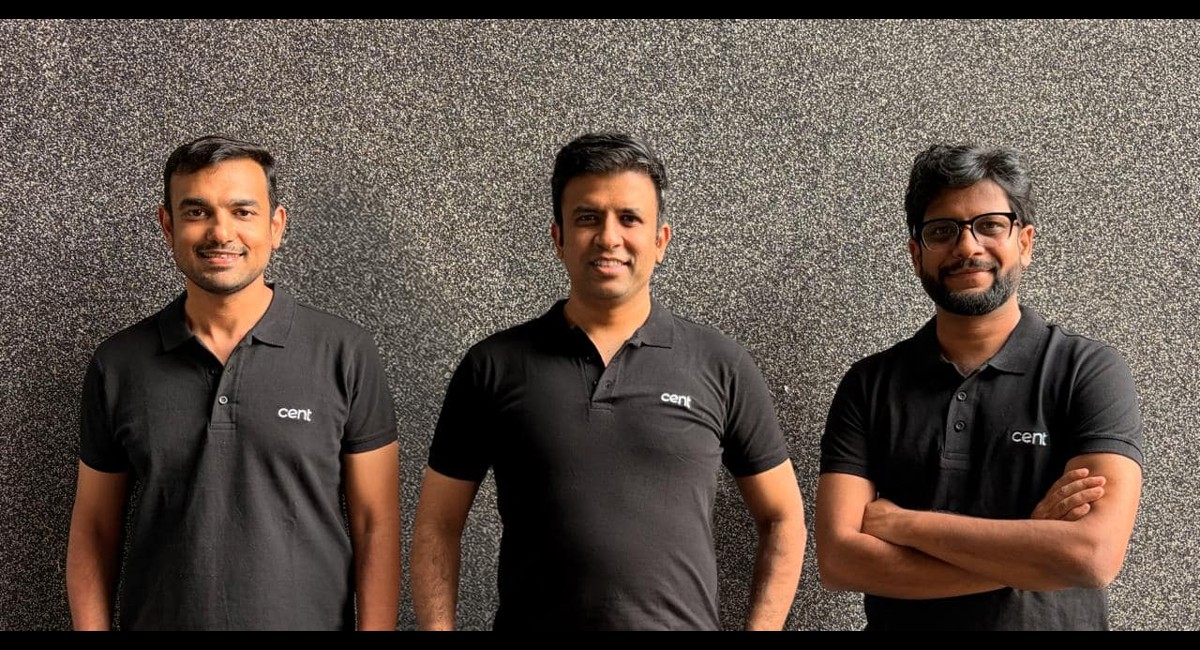
Cent was founded in 2025 by Shashank ND, Anshul Khandelwal and Arpit Garg. Shashank founded Practo, the doctor discovery and health platform, while Khandelwal was chief marketing officer at Ola Electric and Garg led product at Lenskart.
Practo itself holds no stake in Cent, which keeps the new company independent of the older platform. The seed round of about $5 million came from South Park Commons and OneFlow Holdings, Shashank’s family office, earlier in 2025.
The idea is personal for Shashank, who has said he lost three people from his family and close circle to stage 4 cancer in 2024. In each case, he said, the disease had progressed silently and without symptoms until it was too late.
Cent takes its name from the word century, reflecting the founders’ ambition to help people live healthier lives for 100 years and beyond. Its screening protocol, called CCNM, covers cardiac, cancer, neurological and metabolic health, and the company says it screens for more than 300 conditions.
India’s healthcare system is still built to treat illness, not to find it early. We believe the next shift is preventive care that is precise and accessible at scale. Our first 10,000 scans have shown us how much that shift is needed. This investment lets us go deeper into AI, medical imaging and clinical research, and build preventive health infrastructure in India that can serve the world.
Anshul Khandelwal, co-founder of Cent, said this as the company announced the round.
Why this round stands out
Cent Check is priced at Rs 27,500, which puts it far above a standard annual blood-test package. That price is the point. Cent is betting that a smaller group of buyers will pay for imaging-led screening rather than settle for lab tests alone.
Most traditional checkups in India still sell packages named after precious metals and lean heavily on blood tests. They measure what has already happened in the body, while Cent claims to look for what could happen next.
The backers add weight beyond the cheque. Blume Ventures has backed Indian health technology for a decade, and its co-founder Karthik Reddy said the firm believes Cent’s vision can extend from India to the world over time.
Individual investors in the round include former Vodafone chief executive Arun Sarin and former OpenAI business-to-business chief technology officer Srinivas Narayanan. Their presence signals interest from operators who have scaled global technology companies, not just from venture funds.
The wider context
Cent is not alone in pushing prevention up the agenda in Indian healthcare. KeeVurds recently covered Clinics on Cloud, which raised Rs 120 crore to build a network of microclinics, showing how much capital is flowing into new care models.
Still, Cent’s own numbers deserve careful reading. The company says one in four members who felt well at screening had a finding that needed action, and one in 40 needed immediate medical attention. Those figures come from Cent, and they describe its own members rather than the general population.
Screening people without symptoms can also surface findings that need follow-up, and the balance of benefit and cost depends on the individual. A scan that finds something early is valuable only when the follow-up care is sound and affordable.
Our view
Cent has a credible team, a clear product and early traction that many health startups would envy. The Medsee acquisition shows it is thinking about the unglamorous bottleneck of reporting, not just about opening more centres.
The test now is whether it can grow from 10,000 scans toward its 10 million target without losing clinical rigour. At Rs 27,500 a check, access will stay narrow until costs fall, and trust will depend on how openly it reports outcomes over time.
If it clears those bars, Cent could help shift Indian healthcare from treating illness late to catching it early. If it does not, it will remain a premium service for a small group rather than the preventive infrastructure its founders describe.