Hyderabad based Cosmoserve Space has raised $6 million in a seed round to build robotic spacecraft that remove dead satellites and debris from orbit.
The round was led by Japan based Rebright Partners. Aranya Holdings and Naandi Ventures also took part, while existing investors AUM Ventures and Shakti VC increased their stakes.
The company announced the round on 5 November, the same day it opened Base 1, its new facility in Hyderabad for designing, building and testing satellite servicing systems.
What Cosmoserve builds
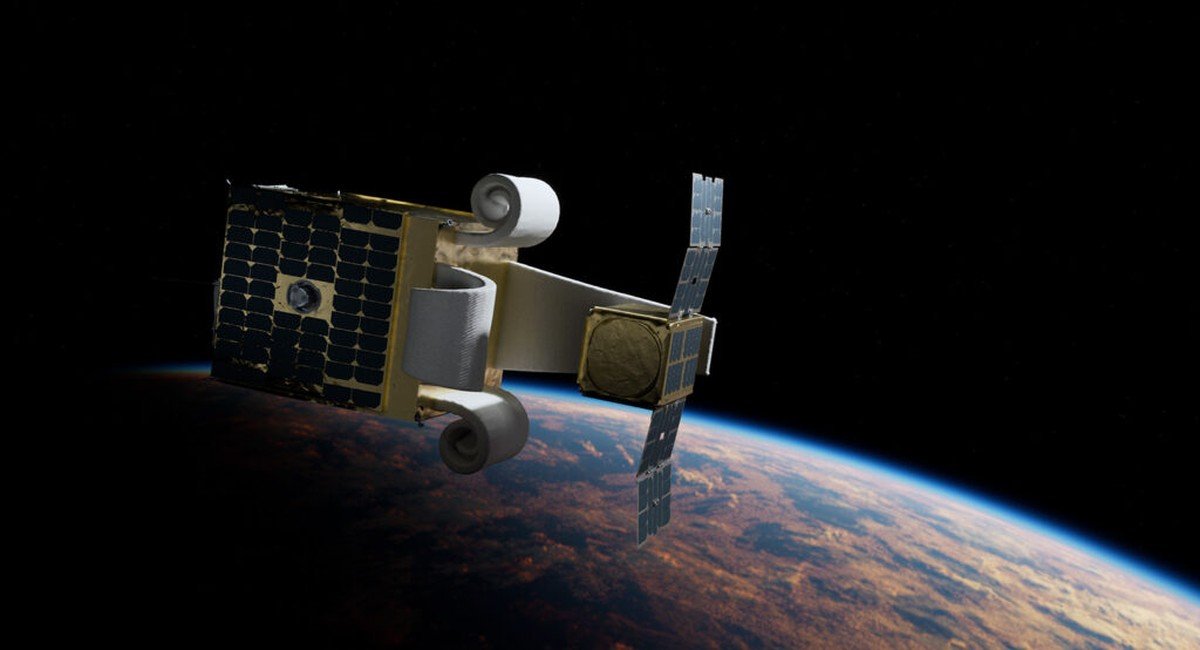
Cosmoserve is building autonomous spacecraft that approach a dead satellite, capture it with a soft robotic system and pull it to a lower altitude for safe disposal. The design lets one craft deal with several pieces of debris on a single mission.
Its system works as a pair. The company calls the two spacecraft Reviver and Mothercraft, with the second acting as a refuelling depot in orbit so the pair can keep working across more sorties.
The approach matters because dead satellites and fragments raise the collision risk for working spacecraft. Removing them keeps busy orbits usable for the operators who depend on them.
Base 1, the new Hyderabad facility
Base 1 sits at VSD Tech Park in Gachibowli and covers about 14,800 square feet. Cosmoserve describes it as India’s first private space debris removal facility and the world’s sixth facility equipped with space vision effects and microgravity simulation.
The facility houses an orbital rendezvous and capture lab, a space robotics innovation lab, an ISO Class 8 clean room for satellite integration and a mission simulation and control centre. It cost about Rs 6 crore to build.
Union minister of state for science and technology Dr Jitendra Singh inaugurated Base 1 virtually, with Telangana IT minister D Sridhar Babu attending in Hyderabad.
“Base 1 is where we build the capability to keep orbits usable, for Gaganyaan, the Bharatiya Antariksh Station and every satellite that follows.”
Chiranjeevi Phanindra, Founder and CEO, Cosmoserve Space
Embrace-2 is the next test
The new money will fund technology demonstrations, two upcoming missions and operations at Base 1. The first of those missions is Embrace-2, an upgraded repeat of the company’s first in space test.
Mission Embrace-1 flew aboard Skyroot Aerospace’s Vikram-1 rocket in July 2026. Its soft robotic petals did not deploy as intended, and the company says it has traced the fault to the thermal mechanism that releases them and fixed it.
Embrace-2 is expected to launch in the coming months to validate the upgraded capture system. A full scale demonstration is planned for 2027, when Cosmoserve aims to approach within 10 metres of a dead satellite.
Phanindra says the company holds letters of intent from four satellite constellation operators, one from the US, one from Europe and two from India. The aim is to sign one paid customer before commercial operations begin in 2028.
A founder who spent 15 years at ISRO
Phanindra worked at ISRO for close to 15 years before setting up Cosmoserve in June 2025. He was deputy project director of the Gaganyaan human spaceflight programme and represented India at the Inter-Agency Space Debris Coordination Committee.
That background shaped the company. His work on debris guidelines at the committee showed him how fast the problem was growing, and Cosmoserve grew out of that experience.
The seed round follows a $3.17 million pre-seed round in September 2025. Phanindra says the company’s valuation has doubled since that round, though the exact figure has not been disclosed.
Why debris removal is becoming a business
The company puts the in-orbit servicing market at $14.3 billion by 2030, with active debris removal alone worth $5.9 billion.
Regulation is pushing the same way. Operators must now plan how their satellites leave orbit, which turns debris removal from a good idea into a service they need to buy.
Indian spacetech is moving with it. Manastu Space raised Rs 22 crore in an ongoing Series A extension last week as green propulsion gains ground, and the sector keeps drawing early stage capital.
Cosmoserve also plans to raise the local share of its manufacturing. About 60 per cent of its mission components are sourced locally today, and Base 1 will help it build more critical parts in house, including optics, avionics and space grade electronics.
It is not building alone. Cosmoserve works with Pixxel on satellite systems, Dhruv Aerospace Netherlands on propulsion and Skyroot Aerospace on launch services.
The funding buys Cosmoserve time to prove its capture system in orbit. If Embrace-2 works as planned, the letters of intent can turn into the paid contracts that decide whether debris removal becomes a real business.