Indian esports platform Let’s Game Now has raised Rs 30 crore in a funding round co-led by Mahindra Group chairman Anand Mahindra and Bestvantage Investments, with a UAE-based family office also taking part. The company will use the money to accelerate the Indian Super Gaming League, its franchise-based national esports competition.
The round was announced on 28 October 2026. Bestvantage Investments advised the company on the transaction. The company has not disclosed its valuation, the size of each investor’s stake or the stage of the round, and it has not named the UAE family office.
Mahindra confirmed the investment himself in a post on X on the same day. He drew a direct line between this bet and the leagues he helped build in traditional sport, and he framed the new league as an ecosystem play rather than a bet on a single team or title.
Building Pro Kabaddi & the Global Chess League taught me that talent alone isn’t enough. Champions need an ecosystem of coaching, leagues & serious competition. That’s what ISGL aims to build.
He also addressed the usual worry about gaming head-on in that post. Responsible and competitive esports, he wrote, demands strategy, reflexes, teamwork and discipline, and it creates work beyond the players for coaches, analysts, creators, designers and producers.
A league built like a sports franchise, not a tournament series
The Indian Super Gaming League is the centrepiece of this funding story. It launched in March 2026 as what its organisers describe as India’s first franchise-based national esports competition, with permanent city-backed teams and a season format instead of standalone tournaments.
Eight teams make up the founding lineup. Five are Indian Super League football clubs in Mumbai City FC, FC Goa, Chennaiyin FC, Kerala Blasters FC and Inter Kashi, joined by Pro Kabaddi side Puneri Paltan and by Bangalore Bhargavas and Andhra Agneyas.
The league spans five titles in chess, FC 26, Call of Duty Mobile, FAU-G and Cricket 26. Players reach the teams through city-based qualifiers, and the grand finale was set for Vizag. The company says the league has also received backing from actors Ranveer Singh and Abhishek Bachchan.
That structure is the point. One-off tournaments give a player a weekend, while a season gives a player a calendar, a team, regular matches and a reputation that builds over time. For a young player trying to turn gaming into a career, that continuity matters more than any single prize.
Why Mahindra’s name matters more than the cheque
Rs 30 crore is a modest round by startup funding standards. What makes it notable is who is writing it and what he has built before, because Mahindra co-promoted the Pro Kabaddi League when kabaddi was still dismissed by many as too niche for prime time television.
That league turned a rural sport into a televised franchise property with city teams, sponsors and a player pipeline. The Indian Super Gaming League is attempting the same franchise trick for gaming, and Mahindra’s backing gives brands and team owners a reference point they already recognise.
The timing helps too. Parliament passed the Promotion and Regulation of Online Gaming Bill in August 2025, which banned real money gaming while recognising esports as a legitimate competitive sport. That separation gives a franchise esports league a cleaner regulatory footing than a business built on wagering ever had.
The founder who played his way into building the league
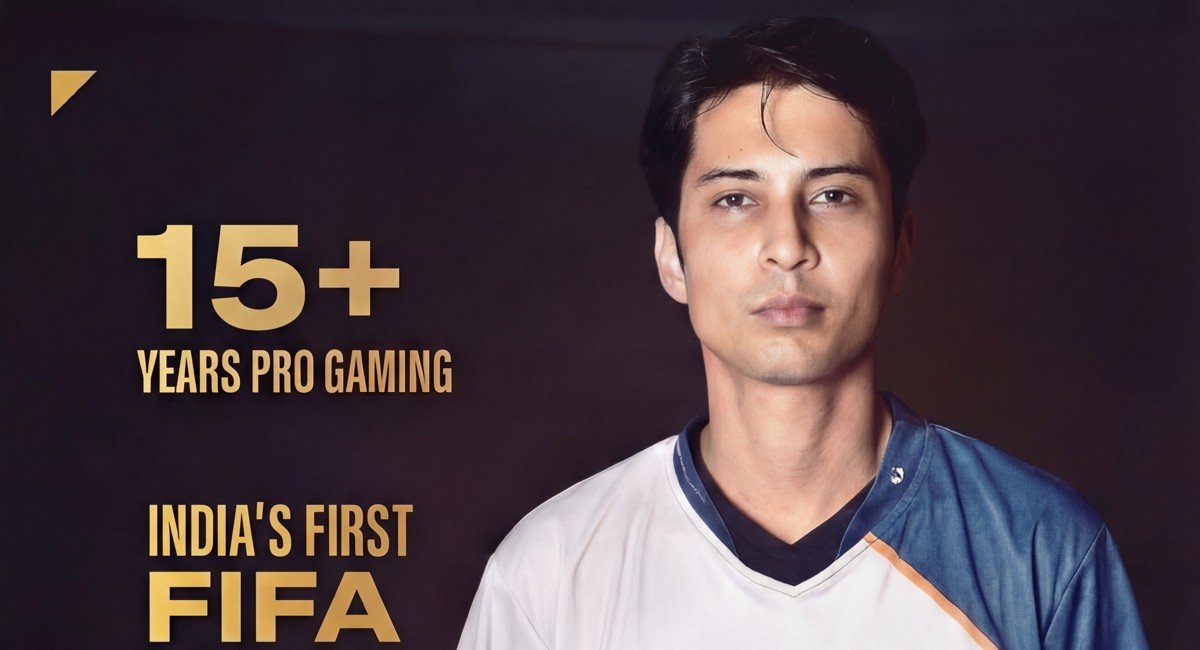
Let’s Game Now was founded in 2018 and is led by chief executive Santanu Basu, who co-founded the league with Gautam Badalia. Basu is himself a former professional player, and Mahindra described him in his post as one of India’s pioneering professional esports players.
Basu competed internationally in the FIFA football game and once finished third at an international tournament. Badalia comes from the other side of the table, with more than two decades in investment banking and capital markets and a stint as chief executive of Route Mobile.
The pairing explains the league’s design. Basu knows what a player’s career lacks without structure, because he lived it, while Badalia knows what sponsors and franchise owners need before they commit money. One founder supplies the sporting credibility and the other supplies the commercial frame.
One early example the company points to is Saransh Jain, who played for Mumbai City FC in the league’s first season and went on to represent India at the Esports World Cup in Paris. It is a single case, not proof of a pipeline, but it is exactly the kind of pathway the league promises to build.
What Let’s Game Now already runs
Beyond the league, Let’s Game Now runs online tournaments, large offline events and live broadcasts across South Asia and Southeast Asia, alongside gaming-led marketing for brands. The company says it has organised more than 2,000 events and served more than 30 clients across 18 countries.
Its community numbers are large, and they should be read as company figures rather than audited results. The company claims a total reach of more than 50 million, a community of more than 1.4 million members and a database of more than 100,000 gamers.
The grassroots numbers are the most interesting part of that claim. The company says its network spans more than 400 colleges across more than 80 cities, reaching upwards of 700,000 students through more than 20 events and more than 30 club partnerships. If that campus base converts into league viewers and players, the franchise model has a ready audience.
Its social footprint backs up the scale of that community, with around 387,900 YouTube subscribers, 193,300 Discord members and 40,000 Instagram followers. Discord matters here in particular, because it is where competitive gaming communities actually organise, practise and recruit.
A market growing fast, but still waiting for its structure
Market research cited alongside the announcement puts the Indian gaming market at about $3.8 billion and projects it to reach $9.2 billion by FY29. The wider esports slice of that market is far smaller, with one industry estimate putting it at roughly $240 million in 2026, which shows how early the competitive side still is.
That gap is the opportunity and the risk in one number. India has the audience, with hundreds of millions of players, but competitive gaming has remained a patchwork of ad hoc tournaments with uncertain schedules and prize money. A franchise league only works if it can fill a full season and keep owners and viewers interested beyond launch events.
Indian gaming has drawn serious capital before, from publishers expanding in the country to startups building adjacent products. KeeVurds recently covered Matiks and its $10 million round for brain games, a reminder that investors are backing very different corners of play, from casual puzzles to full franchise leagues.
The open question for Let’s Game Now is execution. The funding buys time to build the league’s next stage, but the announcement gave no dates for it. What will decide this story is whether the Indian Super Gaming League can turn a promising first season into a durable calendar that players, teams and sponsors can plan around.