Vectorial, a startup building AI models of real consumer behavior, has raised $3 million in a seed funding round led by Smilegate and SenseAI Ventures. The round was announced on October 20 and brings together institutional investors, university-linked funds and product leaders from Meta, Shopify and Mastercard.
The company’s platform lets product, design and marketing teams watch modeled audiences react to a product journey, campaign or AI agent before a single real user touches it. Vectorial says it has already modeled more than 2.5 million real people and run more than 30,000 simulations. Its official site is at runvectorial.com.
The details of the round
Joining the round are Berkeley SkyDeck, the Berkeley AI Research Lab, the Stanford GSB fund and Dent Capital. SenseAI Ventures runs an AI-focused fund aimed at Indian AI startups, and Vectorial says about 500,000 of the 2.5 million people modeled on its platform are from India.
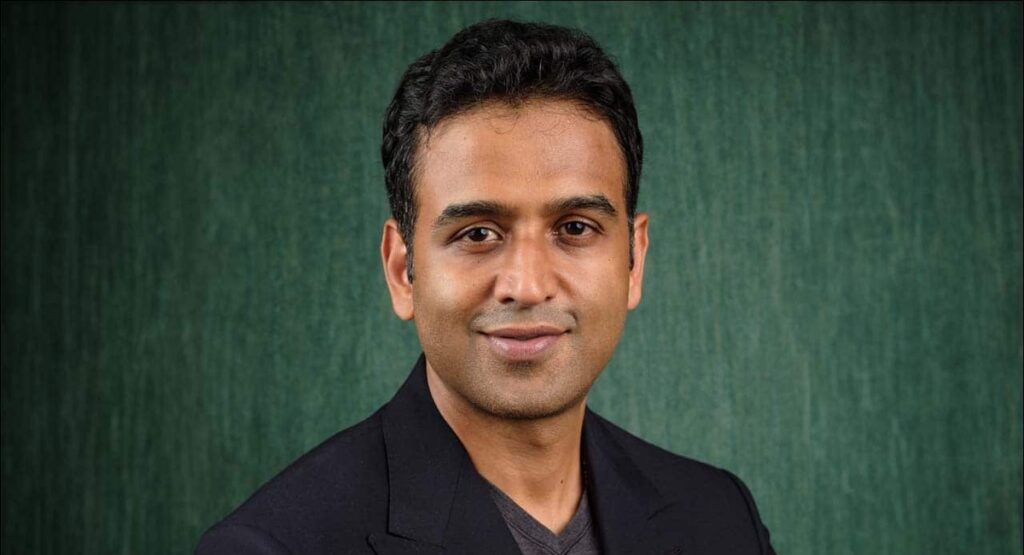
The company was founded by Taranveer Singh, chief executive, Jasmine Kaur, chief business officer, and Rahul Garg, chief product officer. Their backgrounds span Stanford, Carnegie Mellon, the Indian School of Business and the Berkeley AI Research Lab.
Vectorial will use the money to widen its behavioral dataset through new data partnerships and to build SAPIENS 2.0, the next version of its behavior model. Its customers include Midi Health, GoodRx, Suki AI, boAt, Everkind and Concrete Software, which together run about 600 simulations a month.
What the founders said
“We believe AI is creating two distinct frontiers. One focuses on reasoning and solving complex problems, while the other focuses on simulations and decoding human behavior. Two pieces are missing: the ability to simulate many scenarios, and bringing your users directly into the product building ecosystem.”
Taranveer Singh, Co-founder and CEO, Vectorial
Rahul Garg, the company’s chief product officer, said the team wants the model embedded in how products actually get built.
“We continue to invest in our behavior model, but a model alone doesn’t solve the problem. That’s why we put behavior models to work inside the product development loop. We believe this fundamentally changes how products are designed and built. Vectorial puts users in the same room where you build.”
Rahul Garg, Co-founder and Chief Product Officer, Vectorial
The research industry is already shifting
The timing is not accidental. A Qualtrics survey of more than 3,000 market researchers found that 71% expect most market research to run on synthetic responses within three years. Capital has noticed too, with the behavior simulation category attracting several large rounds this year.
Vectorial’s pitch is that its audiences are grounded in observed behavior rather than invented personas. It claims SAPIENS is 30% more accurate than general-purpose language models at predicting behavior and reproduces earlier user-study findings with more than 85% accuracy. Those are company claims, and the honest test will be whether they hold as datasets grow.
The bottom line
Simulated audiences will not replace real users where the stakes are regulatory or clinical. But for the everyday product decisions that teams currently make on instinct, Vectorial now has the capital to find out whether fast, cheap and grounded research can become the default.