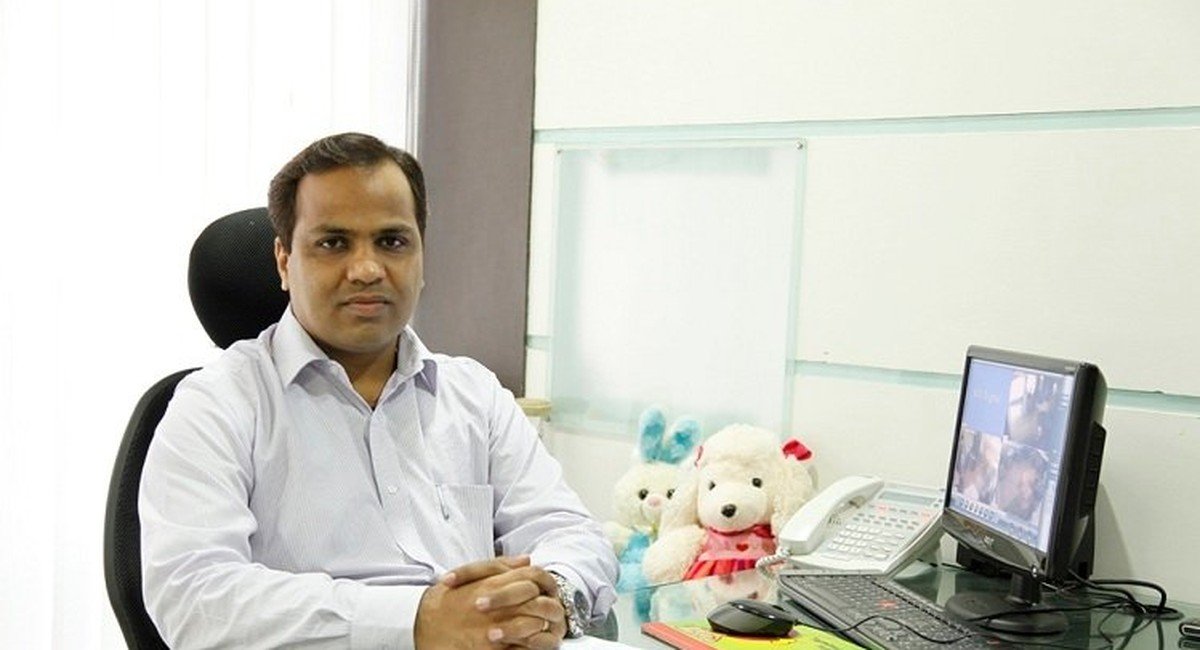
Docterz, a healthcare technology company founded by practising paediatrician Dr Atish Laddad, has raised Rs 5 crore from around 35 investors. The round stands out less for its size than for who funded it, because doctors who already run their clinics on the platform supplied most of the money.
Nearly 60 per cent of the round, close to Rs 3 crore, came from around 20 doctors who use Docterz every day. The remaining investors include Vineeta Singh, co-founder and chief executive of SUGAR Cosmetics, and Avnish Anand, co-founder and former chief executive of CaratLane.
The company plans to use the capital for organic growth and for acquisitions, while building practical artificial intelligence tools for doctors. Those tools are aimed at documentation, administrative workflows, practice data analysis and patient follow-ups, the everyday work that sits around patient care.
A clinic tool built by a doctor who ran one
Docterz was founded more than a decade ago, and its LinkedIn profile dates the company to 2015. Laddad built it around the operational problems he saw in his own practice, where patient care competes with records, staff, appointments and follow-ups for a doctor’s time.
The platform brings together electronic medical records, appointment scheduling, billing, vaccination management and patient engagement in one system. It also covers pharmacy and laboratory management, patient communication, analytics and teleconsultation, so a small clinic can run most of its daily work from a single place.
That breadth matters for the audience Docterz serves. The company says its technology supports more than 5,000 doctors across India, with a particularly strong base among paediatricians, a group that tracks vaccination schedules and growth records over many years.
What makes this funding round special for me is that around 20 doctors who use Docterz have chosen to invest in its future. They know the product, they have seen its evolution, and they understand the needs of the medical community.
The words are those of Laddad, and they capture the round’s real test. A doctor who has used software for years knows its rough edges, so choosing to invest is a stronger endorsement than a first meeting with a new vendor.
When customers become shareholders
Paediatrician Dr Dhananjay Sangle, one of the doctor investors, said he has used Docterz for several years across his clinic’s paediatric and obstetrics and gynaecology practices. He said his decision to invest came from that experience and from nearly 20 years of knowing Laddad personally and professionally.
One of the strongest signals for any business is when its customers are willing to invest their own money in it. That is what drew me to Docterz.
That observation came from Vineeta Singh, and it explains why this small round deserves attention. Customer investors tie their own money to a product they must keep using, which gives them a direct reason to demand that it keeps improving.
Docterz also plans to reach more independent practitioners and smaller clinics, a segment where digital adoption has lagged behind large hospital chains. For those clinics, software must fit existing workflows rather than force a hospital sized system onto a small team.
Small clinics meet a national digital health push
The timing fits a wider shift in Indian healthcare. The company says it is working closely with India’s evolving digital healthcare ecosystem, including the Ayushman Bharat Digital Mission, which links health records to a citizen’s health account with consent.
The Press Information Bureau reports that the mission has linked over 104 crore health records to over 93 crore health accounts. That scale creates a practical need for clinic software that can create and share digital records without disrupting a doctor’s day.
Docterz says it places emphasis on patient data privacy, information security and responsible use of healthcare data, while leaving clinical decisions with the physician.
Rs 5 crore will not transform Indian healthcare on its own, and Docterz has not disclosed a valuation for the round. What it does show is a business whose users are willing to fund its next stage.