Autonomous delivery robot maker Ottonomy has raised approximately Rs 40.6 crore, about $4.2 million, in a post-seed round with participation from Japan based venture firm Enrission India Capital.
The company plans to use the money to expand globally across healthcare and industrial automation, where it says demand for autonomous logistics is rising as workforces stay stretched.
No lead investor was named in the announcement, and no valuation was disclosed, so the round is best read as a targeted expansion cheque rather than a large growth round.
A robot built for the middle of the journey
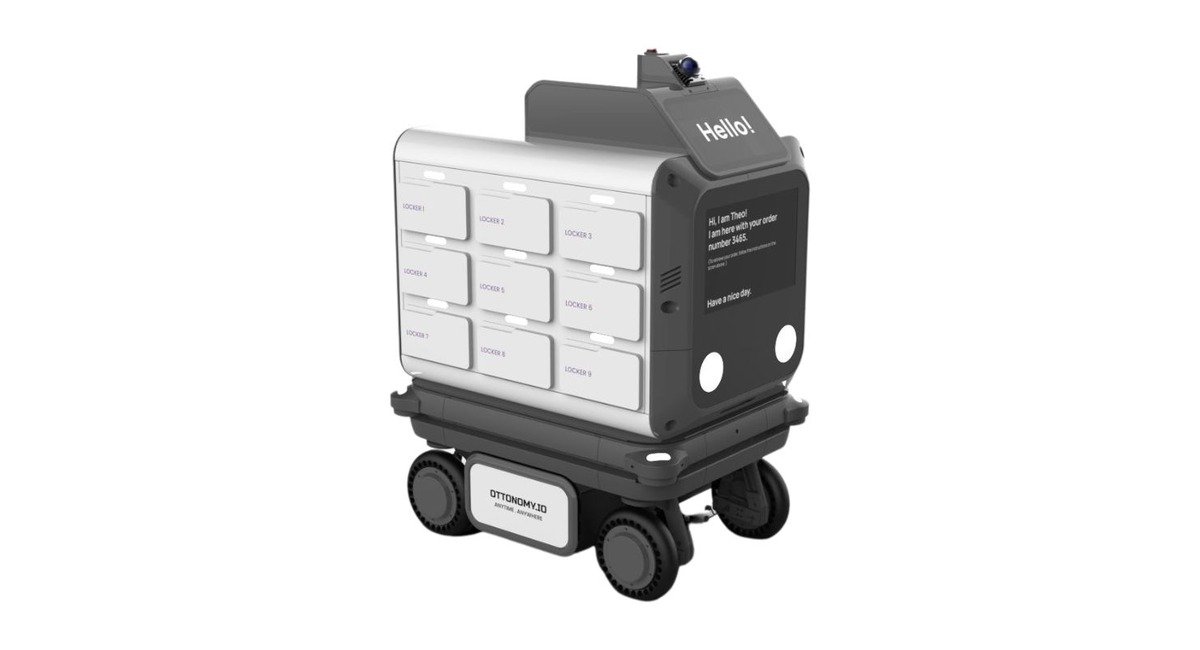
Ottobot is built to move goods across indoor and outdoor spaces without a human driver. Its Contextual AI software reads the setting, whether a hospital corridor, a factory floor or a public path, and plans a route through it with minimal human help.
In hospitals, that work means carrying medicines, lab samples, equipment and other supplies between departments. Ottonomy says its robots free clinical staff from routine carrying work so they can spend more time on patient care.
The company says its robots can free up 40 percent of nursing time now spent on non clinical tasks. That figure comes from Ottonomy itself, and it points to the pitch behind the healthcare push.
From a 2020 start to hospitals, airports and campuses
Ottonomy was founded in 2020 by Ritukar Vijay, Hardik Sharma, Pradyot Korupolu and Ashish Gupta. Vijay brings about two decades of experience in robotics and autonomous driving to the chief executive role.
The company is headquartered in Sunnyvale, California, with a team of more than 60 people, most of them working across Delhi National Capital Region in India. It also runs a production facility in Noida and says its robots are deployed across North America, Europe, the Middle East and India.
Its customers span hospitals, industrial campuses, airports and last mile operators. At Wellstar Kennestone in the United States, its robots move blood samples, vaccines and other clinical samples across buildings with a full chain of custody.
Its range includes Ottobot 2.0, Ottobot M, Ottobot V and Ottobot X, and customers typically take the robots on a subscription of one to five years. That subscription model covers the hardware, the software, the fleet orchestration platform and ongoing support.
Why a Japan focused investor fits this expansion
Enrission India Capital is a Japan based venture firm that backs early stage Indian startups from seed to Series B. Its portfolio includes GoDesi, Pico Xpress, Uravu Labs, StackBox and Hexalog, and it also helps portfolio companies explore expansion into Japan.
That Japan link matters for Ottonomy, because the same workforce pressures driving hospital automation in India and the United States are also visible in Japan. A backer with feet in both markets can open doors that money alone cannot.
The test now is deployment, not the robot
The next test for Ottonomy is deployment at scale rather than the robot itself. Hospitals and factories will judge Ottobot on reliability across lifts, doors, outdoor paths and busy corridors, day after day.
Indian robotics funding stayed busy on the same day, with Peppermint Robotics raising Rs 100 crore in a pre-Series B round for its cleaning robots. Ottonomy is playing a different game, moving goods inside complex sites rather than cleaning their floors.
If Ottonomy turns this round into more hospital and industrial deployments abroad, the post-seed cheque will look like a well timed bet on unglamorous logistics. The robots still have to prove themselves in daily use, and that proof will come one delivery at a time.