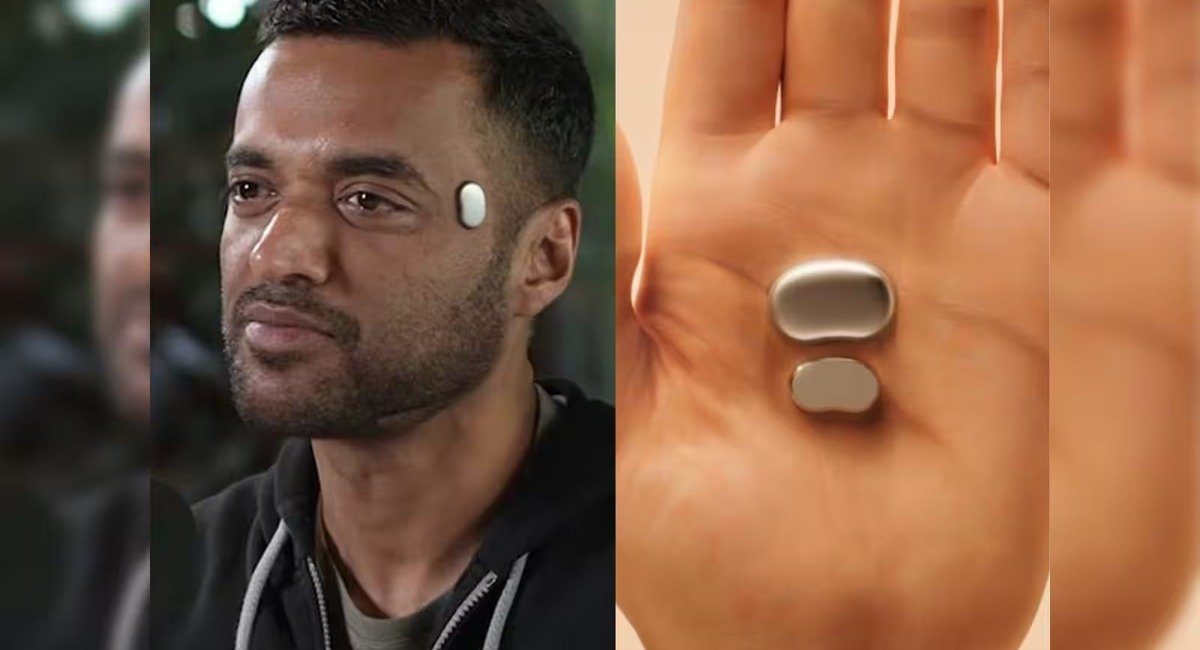
Deepinder Goyal has posted a 10-point note on Temple, his Rs 85,000 wearable, after four days of public argument about what the device does and who it is for. It went up on Diwali, 8 November, and had passed 2.2 million views by 9 November.
It is the second time in four days that Goyal has answered his critics in public. This time he did not only defend the device. He narrowed what it is, who should buy it, and what the company still owes the public by way of proof.
We covered the start of this story on 1 November, when Temple opened pre-orders in India at Rs 85,000, with made to order deliveries in about three months.
What Goyal said this time
The post opens with thanks to his critics and supporters for the last two days of argument, and says the exchange showed him what the company needs to explain better. The rest is a list of ten corrections and promises.
The first point is the one that has travelled furthest. Temple, he says, is built for the world and not for India, and the company does not expect many Indians to buy it, because it is not for the Indian market yet.
“Temple is not made for India. It’s made for the world.”
Deepinder Goyal, on X, 8 November 2026
He also says the company should have kept the names of future devices private until they are ready, and that Roomdeaf AI is being taken off Temple’s website for now. Roomdeaf AI, he adds, is an expansion of what the device can do and not a pivot.
Two points deal with who should buy Temple. Goyal says the company does not want vulnerable people to buy it yet, especially people with mental illnesses or curious teenagers. He says it is not a mass market device and likely will not become one until the price falls a lot.
He also says the limits of the device should appear in bigger type and in more places, not buried under an asterisk. And he says Temple is a consumer electronics company, while Nitya, in which Temple holds a minority stake, is a separate mental health company.
On regulation he is blunt. Social media is not the regulator for Temple, he says, and the company will hold whatever clearances it needs before it makes any claim that needs them.
“Social media is not the regulator for Temple.”
Deepinder Goyal, on X, 8 November 2026
The final point is a promise. Goyal says he will post a note on how Temple calculates Brain Flow, what it can be used for, and most importantly what its limits are. It was due the next day, 9 November, and it had not appeared by the time we checked.
How the row reached this point
Temple opened pre-orders in India on 1 November at Rs 85,000, through its app and website. Each unit is made to order, delivery takes about three months, and the price includes a lifetime subscription to the software.
The argument began days later, when doctors questioned the device on X. Hepatologist Dr Cyriac Abby Philips, known online as The Liver Doc, described it as a scam and questioned the science behind its claims about blood flow to the brain.
Goyal answered on 5 November with a seven-point post addressed to Indian doctors. He said the company had spent 30 million dollars building Temple, with 20 million of that his own money, and pointed to a 14-day no-questions-asked return policy.
He also said he had left his role as chief executive of Eternal, the parent of Zomato and Blinkit, to work on Temple because of purpose rather than money. The exchange kept going, and the Diwali post is his second long reply.
What Temple is, and what it is not
Temple is a small pill shaped wearable that sticks to the side of the head, between the forehead and the ear, using single-use adhesive grips. It uses light sensors to track signals linked to blood flow and oxygenation, and turns them into two scores, BrainFlow and Entropy.
BrainFlow tracks changes in blood flow. Entropy is a live score from 1 to 250 that tracks how much effort the body is under during exercise, stress, poor sleep or recovery. The device does not read brain waves, and it has no screen.
Goyal has built Temple inside Continue Research, a health technology venture he founded in 2024 with Ram Singla. The idea behind it is his Gravity Ageing Hypothesis, which links ageing to a long-term shortfall in blood flow to the brain.
That idea is part of the argument. Doctors who criticised the device say the hypothesis and the measurement behind it have not been proved. Goyal says the company will keep working with full transparency and careful language, and that the field has no settled answers yet.
The science question behind the row
The core question is whether a sensor on the temple can say anything useful about blood flow inside the brain. Temple uses photoplethysmography, the same optical sensing used in smartwatches, placed over the superficial temporal artery.
Neurologists who weighed in say that artery feeds the scalp, while the brain is fed by different vessels. Dr Sudhir Kumar, a senior consultant neurologist at Apollo Hospitals in Hyderabad, said publicly that a sensor over the neck would track brain circulation more closely.
Temple’s first public study, posted as a preprint on 4 September, compared the device with transcranial Doppler ultrasound in 23 healthy adults. The two readings moved together with a median correlation of about 0.8, but the study has not passed peer review and was funded by Temple itself.
The study also does not show that the signal comes from the brain rather than the scalp, and it does not turn the reading into absolute units of blood flow. That is the gap Goyal’s promised note is expected to address.
What to watch next
The first thing to watch is the Brain Flow note itself, and whether it explains the method, the uses and the limits as plainly as the Diwali post promised. The second is whether Temple’s website changes, since Goyal has admitted its language was ambiguous.
The third is the pre-order book. A device that its own founder says is not for everyone, and not for India yet, will be judged on whether buyers still come at Rs 85,000, and whether the 14-day return policy gets used.
For now the story is a founder answering in public, point by point, instead of through a press release. The next post will show whether the answers hold up.


