A $215 million bet on robots in the lab
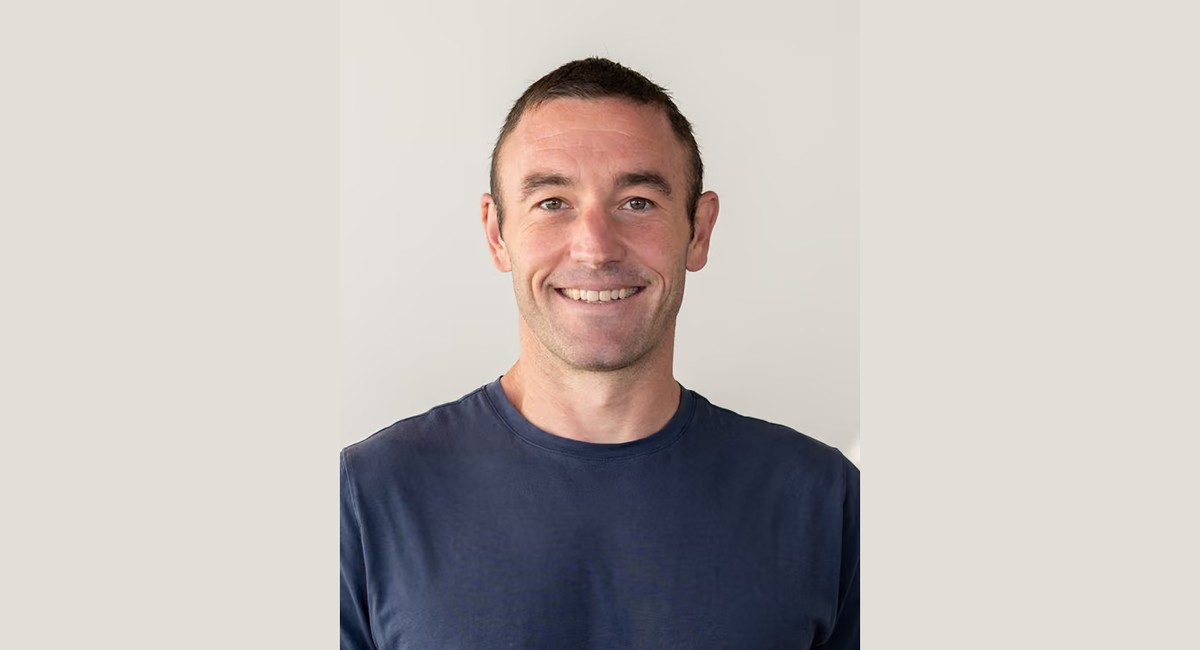
Warp Sciences, a new startup from former OpenAI executive Kevin Weil, has emerged from stealth with $215 million in Series A funding. The round was led by Lightspeed Venture Partners and values the company at $865 million. Weil announced the launch and the financing on October 22.
Premji Invest, Mayfield, IVP, Lux Capital and Menlo Ventures joined the round. The investor list also includes well-known technology founders, such as LinkedIn co-founder Reid Hoffman, Coinbase co-founder Brian Armstrong, Figma co-founder Dylan Field, Instagram co-founder Mike Krieger and OpenAI chief financial officer Sarah Friar.
Who is behind Warp Sciences
Weil serves as chief executive. He joined OpenAI as chief product officer in 2024 and later ran its science division before leaving in April when the company folded its science work into its core teams.
His co-founders bring deep AI and science experience. Manohar Paluri, an alumnus of IIIT Hyderabad and a co-founder of Facebook AI Research, serves as chief technology officer. DJ Patil, the first White House chief data scientist, is chief operating officer. Solomon Reisberg, formerly of Terremoto Biosciences, is chief scientific officer.
What the company will do
Warp Sciences plans to build a next-generation chemistry contract research organisation in the United States. Instead of developing its own drugs, it will make and test molecules for biotech and pharmaceutical companies.
The company will start with lead optimisation in small-molecule drug discovery, where chemists make hundreds of variations of a promising molecule to improve how it works and reduce side effects. Human chemists will wear cameras and sensor gloves so robots can learn lab techniques and eventually run experiments around the clock.
“AI has dramatically accelerated software engineering and mathematics, but it has yet to make the same impact in the physical sciences,” said Weil, co-founder and CEO of Warp Sciences. “Chemistry and biology move forward when you make something, test it and learn from the result. If we want to build more capable AI for science, we need to generate real-world data at scale.”
The bigger race into AI drug discovery
Warp is entering a crowded field. OpenAI acquired Orchestra Bio earlier this week, a startup building AI agents for pharmaceutical development. Anthropic launched a life sciences suite in June, and Isomorphic Labs, the Google DeepMind spinout, raised $2.1 billion in May led by Thrive Capital.
Much of the molecule-making work Warp wants to automate is currently outsourced to Chinese contractors such as WuXi AppTec. Bringing that work back to American labs run by robots would also insulate drug development from geopolitical supply chain risks, which is likely to win the company supporters in Washington.
Our view
An $865 million valuation for a 20-person company with no product yet is a steep price, and robotic labs still have to prove they can deliver results at scale. But few founders combine frontier AI experience with industry confidence the way Weil and his team do, and the investor roster shows many believe the next big AI payoff sits in the physical world.