Bengaluru-based voice AI startup Karta AI has raised $3 million in a seed funding round led by PeerCapital and Cedar Hill Capital, the company announced on Thursday. Wyser VC, CDM Capital and Seedstars also took part in the round.
Karta AI builds voice agents that handle inbound customer calls for banks, lenders, fintech companies and insurers. The round values the company’s bet that the hardest calls in customer service are the ones where the caller shows up with a problem, not the ones a company places for collections or reminders.
Where the money goes
The startup said the funds will go toward strengthening its platform’s end-to-end automation and multilingual capabilities. It also plans to expand deployments with more financial institutions and grow its engineering and go-to-market teams.
Over the near term, Karta AI wants to extend automation across more inbound customer journeys, from onboarding and servicing to claims and renewals. The longer-term plan is to build reusable industry-specific capabilities and take the platform to international markets.
Why inbound calls
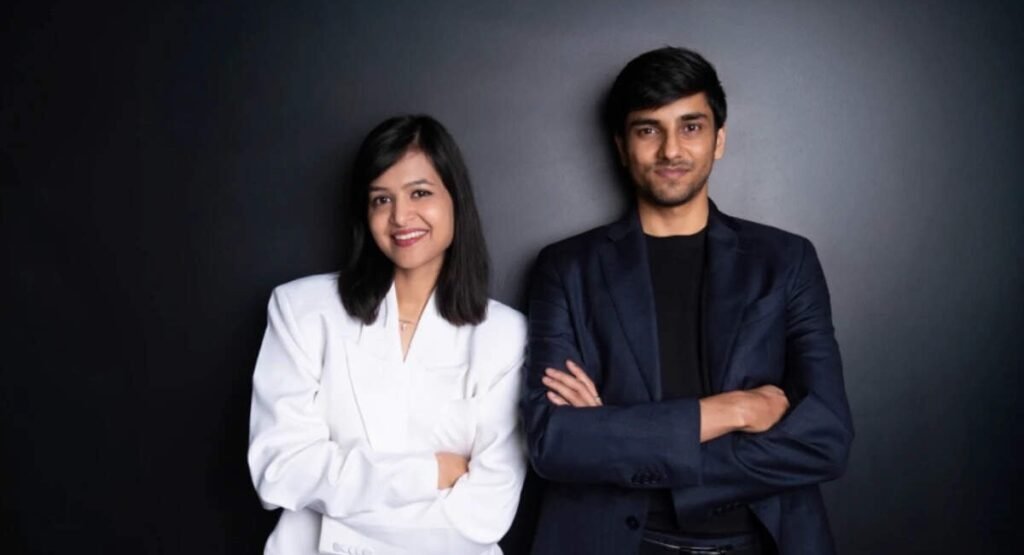
Karta AI was founded in 2024 by Vijaypal Singh and Abhishek Kushwaha, both former executives at Razorpay. The two had worked on internal AI automation at the fintech before leaving to start the company. Singh serves as chief executive and Kushwaha as chief technology officer.
The startup began with chat-based automation and moved into voice in August 2025. Today it runs an omnichannel platform across voice, chat, email and WhatsApp, though voice is the main product.
The platform targets what the company calls level 2 and level 3 queries, the calls that need an agent to pull data from several systems and act on it. A borrower might ring in to check a loan disbursal and ask for a foreclosure statement on the same call. Karta AI’s agents are designed to handle both requests in one conversation instead of treating each query separately.
At its core is what the company calls a predictive context engine. It draws on standard operating procedures, knowledge bases and past conversations handled by both human agents and AI to build context, so follow-up requests do not get treated in isolation. High-risk matters such as fraud are still routed to human agents.
The company says it handles around two million customer conversations a month across more than 25 languages and has 10 to 12 paying customers, including PhonePe, Pine Labs, Bajaj and Aavas.
“Inbound is where financial institutions carry the most cost and where customers feel the most friction. We built Karta AI to resolve the hard calls, the ones that need several systems and more than one answer, and to bring in a human only when it matters. Our customers see that as measurable returns, in lower cost to serve and higher conversion. This funding lets us take that to more institutions, and our vision is an intelligent assistant for every customer and an AI workforce running every workflow,” said Vijaypal Singh, co-founder and CEO of Karta AI.
A crowded field in BFSI voice AI
Karta AI is entering a busy lane. Desible.ai recently raised Rs 32 crore in a seed plus round led by Prime Venture Partners to build voice AI for banks. Navana.ai picked up Rs 40 crore in a Series A round, and Mumbai-based Rezolv raised $12.5 million in a Series A led by Norwest for its multilingual AI voice agents.
Karta AI’s pitch is that it is working on a different problem. Most of its peers automate outbound calls or simpler inbound queries. Karta AI is going after inbound calls with multiple intents, which it argues are the costliest part of a bank’s customer operations.
Singh estimates that complex queries account for roughly 80 percent of what customer service costs, even though they are a smaller share of volumes.
The company cites deployment results to back the claim. At a home loan company, its inbound servicing agent resolves around 70 percent of borrower queries end to end, the company says, with the cost to serve per query roughly 50 percent lower. At a payments company, its retention agent delivered 25 percent more conversions than human agents, it claims.
Our take
Voice AI for customer service is getting crowded, and claims like 70 percent resolution rates deserve the usual caution until they hold up across more deployments. But Karta AI has picked an honest wedge. Inbound calls are unpredictable and hard to automate, which is exactly why most voice AI companies avoid them.
Two founders who built AI automation inside Razorpay, paying customers like PhonePe and Pine Labs, and fresh seed money from PeerCapital and Cedar Hill Capital give the startup a credible shot at proving the hard calls can be automated after all.